
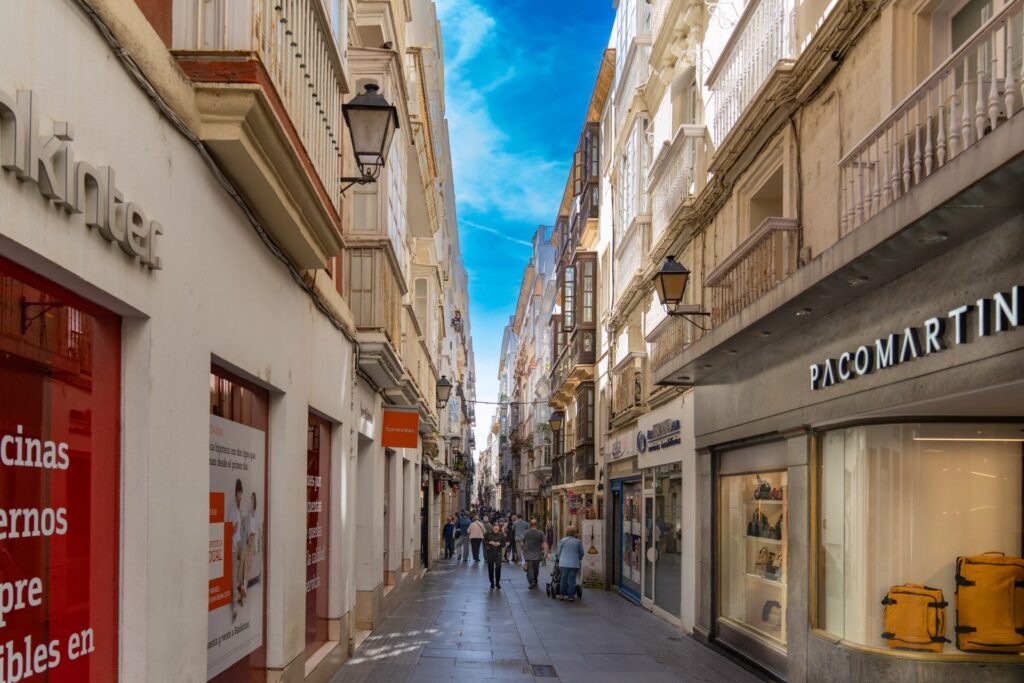
Income-producing retail units can be an attractive way to generate income from day one, but not every asset with a tenant is a good investment. The key is knowing how to read the lease, the location, the operator and the real sustainability of the rent.
At Borneo Advisors, we work with investors looking for commercial assets with economic logic, not just apparent rents. That is why, before buying a leased retail unit, it should be analyzed as a complete transaction: income, risk, management and future liquidity.
What income-producing retail units are and why they attract investors
An income-producing retail unit is a commercial property that is already leased and generates recurring income. For many investors, its appeal lies in the ability to assess an existing rent, a signed lease and an operating commercial activity.
However, buying rent does not mean buying security. An asset may look stable while hiding relevant risks: a short lease, above-market rent, weak operator, need for works, dependence on a specific license or low liquidity if the tenant leaves the space.
That is why, when investing in commercial premises, it is important to go beyond the advertised yield. You need to ask whether that rent can be sustained, whether the unit can be re-let and whether the price correctly reflects the risk assumed.
Investing in commercial premises: lease, operator and rent
The first block of analysis is contractual. Term, mandatory occupancy period, guarantees, rent indexation, recoverable expenses, penalties and break clauses are elements that can completely change the value of the transaction.
The second block is the operator. A lease with an established brand does not carry the same risk as an activity with no track record, even if both pay the same rent. Solvency, sector, seasonality and dependence on a single point of sale must be part of the analysis.
The third block is the rent. A high rent may look positive, but if it is far above market, it can become a problem at renewal. To test it, it is advisable to review comparable commercial premises for rent and understand the real demand in the area.
Income-producing retail units Madrid: location factors
Income-producing retail units in Madrid are usually analyzed by axes, neighborhoods and operator type. Being on a well-known street is not enough: visibility, footfall, frontage, accessibility, nearby competition and the consumption profile of the area all matter.
In prime areas, liquidity is usually higher, but the entry price can reduce yield. In consolidated secondary locations, returns may be higher, although they require a more careful study of demand stability and re-letting capacity.
Use must also be assessed. Hospitality, services, health, convenience, supermarkets, customer service offices or specialized retail have different risk profiles. The unit must be flexible enough to survive changes in operator or consumer habits.
Commercial premises rental yield: how to calculate it properly
Commercial premises rental yield should not be calculated only with annual income and purchase price. That gross calculation is useful as a filter, but it can be misleading if it does not include expenses, vacancy, taxes, maintenance and possible CAPEX.
A professional analysis should work with at least three scenarios: base, conservative and stressed. In each one, rent, lease term, vacancy period, incentives, fit-out costs, financing and exit price are reviewed.
This approach fits within a broader view of real estate investment in Spain, where each asset is compared with alternatives and is not decided in isolation.
Sale of income-producing retail units: risks you should detect
In sale transactions involving income-producing retail units, some risks appear late if they are not reviewed from the beginning. One of the most common is accepting as stable a rent that depends on exceptional conditions or on an operator with limited financial capacity.
It is also advisable to review licenses, community rules, charges, urban planning limitations, technical issues and potential special assessments. A retail unit can be leased and still require investment or carry contingencies that reduce the real return.
Before closing the purchase, rigorous real estate due diligence helps validate whether the lease, the asset and the price support the investment thesis.
How Borneo Advisors can help you with income-producing retail units
Borneo Advisors analyzes commercial premises from an investment perspective: location, operator, rent, lease, liquidity and exit. The goal is not to buy any rent, but to identify transactions capable of sustaining value over time.
Our team combines market analysis, negotiation and operational retail knowledge. If you are looking for tailored real estate advisory, we can help you filter opportunities, detect risks and structure a data-driven decision.
Conclusion on income-producing retail units
Income-producing retail units can provide recurring income and diversification, but only when the lease, operator, rent and location are aligned. The initial yield matters, although it should not be the only criterion.
Investing well in retail means looking at the asset as a system: who pays, why they can keep paying, what would happen if they left and who would buy the unit in the future. That is the difference between buying rent and building a defensible investment.
Frequently asked questions about income-producing retail units
What are income-producing retail units?
They are commercial premises that are already leased and generate recurring income for the owner from the moment of purchase.
Is it safe to invest in leased commercial premises?
It can be a solid investment if the lease, operator, location and rent are sustainable. Security depends on the prior analysis.
How is the yield of a commercial property calculated?
It is calculated by comparing annual net income with total investment, including expenses, taxes, vacancy, maintenance, financing and CAPEX.
What should you review before buying income-producing retail units in Madrid?
Lease, tenant solvency, rent compared with market, licenses, technical condition, visibility, demand in the area and re-letting capacity.
What risks are involved in selling income-producing retail units?
Inflated rents, short leases, weak operators, problematic licenses, low liquidity or unexpected works.
Does Borneo Advisors advise on investment in commercial premises?
Yes. Borneo Advisors helps analyze, filter and negotiate retail transactions with an investment approach and risk control.

